Best Way to Practice Pool: How to Train Effectively in Pool

American billiards — or pool — is more than just a game.

It’s a culture built on precision, patience, and strategy.

When people search for “pool near me” or “billiards near me,” they’re usually thinking of this particular sport — classic American billiards, which has become popular in the United States, Canada, Korea, China, and many other countries.

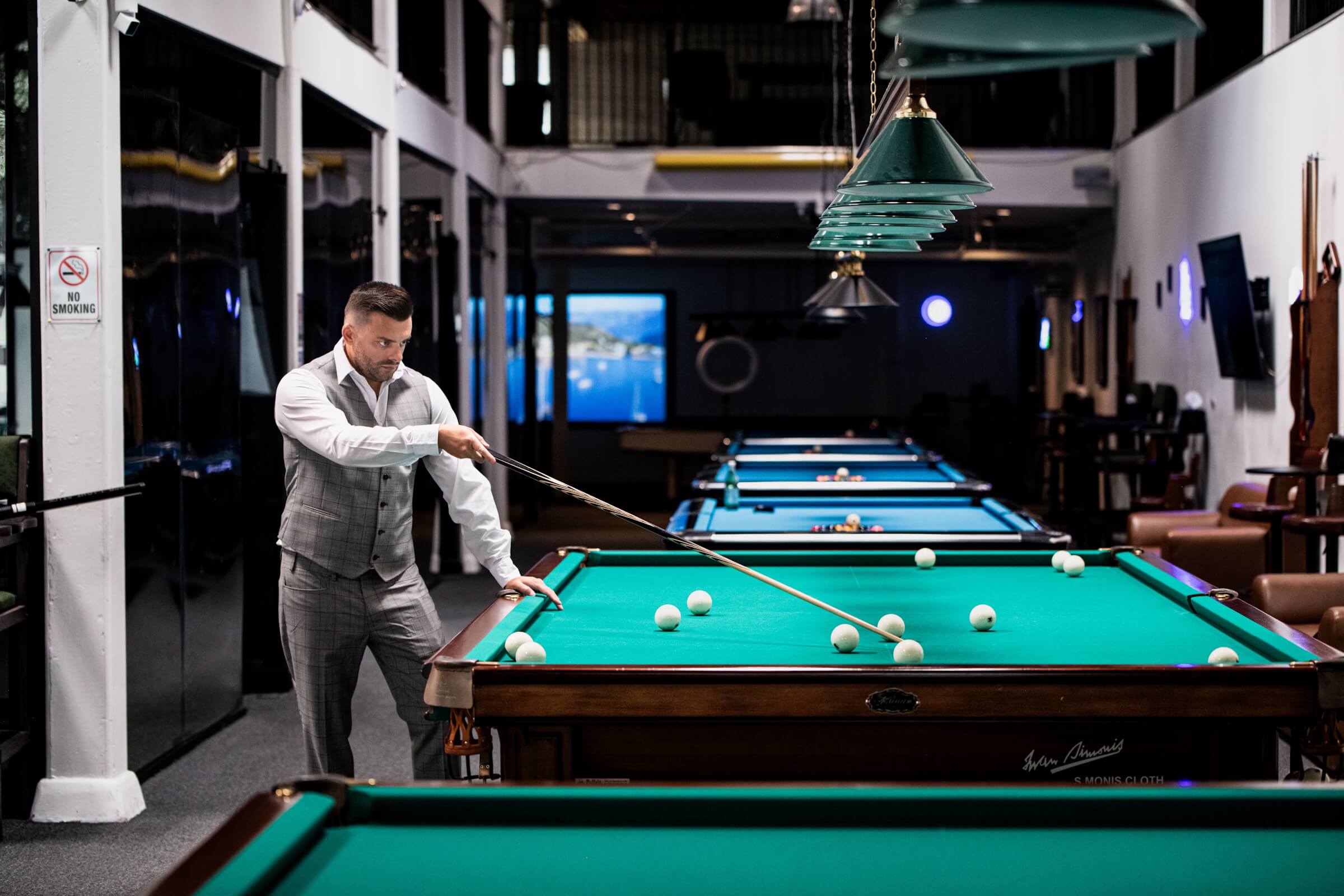
The Peaky Sticks Billiards Academy is a place where players train on professional nine-meter tables, the standard for national and international tournaments.

Whether you’re transitioning from amateur play to serious competition, success in pool depends on consistent practice, the right approach, and attention to the fundamentals.

Understanding Pool: What You Need to Know

First, let’s break down the concepts:

  • Pool is an American billiards game, with 8-ball, 9-ball, and 10-ball disciplines, on standard “nine” tables. Smaller balls, dynamic play, and a greater emphasis on tactics and accuracy.
  • Pyramid is a completely different game (free, combination, dynamic pyramid). Pool does not use these rules, and the two disciplines do not overlap.

At Peaky Sticks, they play pool, and 95% of the audience are players who have no experience in pyramid. That’s why we focus on pool, a game that develops concentration, accuracy, and strategic thinking.

The Best Ways to Train in a Pool

To improve your pool skills, it is important to approach training with a clear structure and goal. Here are some tips from the coaches of Peaky Sticks Billiards Academy:

  • Individual lessons with a coach

Personal lessons with an experienced mentor help you quickly correct technical errors, improve your stance, learn positional play and control the ball after the shot.

  • Repetition of typical game situations

Practice standard positions: shots from corners, bank shots, speed control. Repetition builds stability, and stability gives confidence.

  • Playing with stronger opponents

Playing with players who have better skills allows you to see new solutions. Each such match teaches positional play, tactical shots and helps you cope with pressure.

  • Serial shots on one ball

Practice hitting one ball over and over again. Your task is not just to score, but to consistently control the outcome of each shot.

  • Safe Shot Training

The ability to play carefully is an important part of tactics, especially in 9-ball and 10-ball formats. It is no less important than direct shots.

  • Analyze the game through video

Record your game and watch the video. This helps to see moments that you might not notice during the game.

The main thing is regularity. Practice regularly, approach training strategically and pay attention to details.

Why Equipment Matters

Your progress depends not only on your skills, but also on the quality of the equipment you practice on.

Most bars use smaller tables (7 feet), where shots are shorter and mistakes are easier to correct.

But professional billiards is played on nine-meter tables – faster, more accurate and much less forgiving.

At Peaky Sticks Billiard Academy, each player trains on classic nine-meter tables with professional coating and lighting – the same equipment you will find in real tournaments.

This allows you to develop techniques that give real results in the professional pool.

Make your game better

Playing billiards is one thing. Playing pool systematically and professionally is a whole different matter. If you really want to know how to shoot pool better, here is a quick summary:

  • Work out with a coach.
  • Practice key game situations.
  • Play against tough opponents.
  • Train on quality equipment.
  • Learn theory and tactics.
  • Don’t give up after losing.

Peaky Sticks Billiard Academy is not just a pool club. It’s an educational and sports space where training, classes, educational tournaments, and development programs are held.
How to Run a Pool Tournament: A Practical Guide Without Excessive Templates

Organizing a pool tournament doesn’t have to be complicated or burdened with unnecessary formalities. At Peaky Sticks Billiards Academy, we believe that even a small tournament can be run professionally – if you know a few key principles.

This guide is designed for those who want to run a quality competition: in a bar, club, training camp or even at home. A minimum of templates, a maximum of practice – only what really works.

We’ve collected the most important things: how to choose a format, build a tournament grid, prepare equipment, agree on rules and create an atmosphere of fair play. Follow these simple steps – and your tournament will become an event that participants will want to return to.

Essential Pre-Game Setup

Small tournaments are simple: a few players, one table, a short list of pairs, and you’re ready to go. However, once the number of participants increases to a dozen or more, the organiser must not only maintain order but also establish a clear system to prevent anyone from getting lost.

To avoid delays and confusion, form the basic elements in advance:

  • Choose a tournament format.
  • Determine the method of drawing the lots.
  • Draw up a schedule and duration of matches.
  • Agree on uniform rules.
  • Choose a method of recording the results.
  • Consider how to organize the final.

A well-prepared tournament is one in which participants do not think about organization, but simply play. Your task is to create exactly such conditions.

Tournament Setup: Preparing for Smooth Play

It all starts with the right format.

  • Not many participants?

Choose Single Elimination – you are eliminated after a defeat. Minimum hassle, maximum dynamics.

  • Do you want to give a chance for a mistake?

Then, Double Elimination is suitable. One defeat is not the end. But be prepared for organisation: you will need a scheme, a table, Google Sheets, or classic Excel.

  • Do you need to hold a long and thorough tournament?

Then your option is Round Robin (everyone against everyone). The format is for real marathon runners and multi-day competitions.

Useful tip: if there are 10-14 participants, add a bye in the first round to avoid skewing the grid.

Organizing the Bracket

For small tournaments, an A3 sheet or a board pinned to the wall is enough. For larger events, it is more convenient to use digital tools:

  • Challonge – automatic brackets (https://www.challonge.com/);
  • BracketHQ – easy editing and updating (https://www.brackethq.com/);
  • Google Sheets – fast and accessible to everyone.

At Peaky Sticks Billiards Academy, we prefer digital brackets so that players can follow their progress in real time.

Equipment: don’t stop at one cue

Even if you have a great pool table, little things can ruin a tournament. Check:

  • The condition of the balls – no cracks, chips, or severe abrasions.
  • Cues – have at least 2-3 spare ones, in case unexpected participants come.
  • Tournament grid – hand out printed copies or organise access to the online platform.
  • Lighting – no one wants to play in the dark.

Make sure everything’s ready before the first break. Preparation builds professionalism.

Schedule and Game Flow

Create a simple schedule with:

  • match order
  • table assignments
  • time for breaks and buffer

If there are two tables, start two matches at the same time. Always allow for delays. Stick to the schedule, but be flexible so that the game runs smoothly.

It’s Not Just a Game – It’s an Experience

Everyone wants to win. But even those who are eliminated in the first round should leave with a good mood. How to achieve this?

  • The prize doesn’t have to be expensive.
  • The host adds drive. His role is to charge the atmosphere.
  • Music is a must. But not from the phone speakers. Take care of good sound.
  • Photos and videos – immediately in the chat, in the group, on social networks.
  • Collect feedback. What did you like? What would you change? This will help make the next tournament even better.

The first tournament is always the hardest. But if you do it with a soul – people will come back. And they will bring friends. This is no longer just billiards. This is an event that you want to repeat.


How to play pool for beginners – where to start billiards for a beginner

How to start playing billiards as a beginner

Billiards looks simple: table, balls, cue – hit, score, well done. But as soon as you pick up the cue, you understand: there is more technique than it seems. If you are just starting and are looking for how to play pool beginners, you are already on the right track. The main thing is not to rush, because billiards is not about strength, but about accuracy and a cool head.

What is billiards, and why is it not just “knocking balls”

In the USA, when they talk about billiards, they usually mean pool – American billiards. This is the game you will see in bars, billiard clubs, and movies. Other formats – snooker, pyramid – are a separate story.

Pool is played on 7-, 8-, or 9-foot tables. The most popular disciplines are 8-ball, 9-ball, and 10-ball. Each of them has its own nuances, but the base is the same. This is where you start if you want to learn how to play pool correctly from the very beginning.

The basics of the game are your first steps

Before you do complex tricks, you need to master the pool basics. Here’s what you should know:

  • Positioning and stance

Your body position directly affects your accuracy. Stand straight, your body is stable, your left hand is a support, and your right hand is holding the cue. It sounds simple, but it’s the basis of everything.

  • How to hold the cue

Don’t squeeze it too hard. Your hand should be flexible but controlled. The stroke should be smooth – as if you are drawing a line in the air.

  • Cue ball control

The ball that you hit on others is the cue ball. And the ability to not only hit, but also leave it in the right place is a real art. But this is also learned gradually through billiards training.

Typical mistakes of beginners

Beginners often think that the main thing is to hit hard. In fact, strength rarely helps. Main mistakes:

  • Too hard a hit without aiming.
  • Incorrect stance.
  • Lack of planning (where the cue ball will go after the hit).
  • Lack of patience — you want to “score quickly”.

If you want real progress, search for pool tips for beginners, not on TikTok, but in a real club or with players who already have experience.

Rules: how not to look strange at the table

Many people, having come to a billiard club, do not understand the elementary thing: how do you play pool — it is also about the rules, not only about the technique.

  • In 8-ball, one player plays for the “stripes”, the other for the “solids”. After pocketing all your balls, you must declare and pocket the 8. If you accidentally pocket it earlier, you lose.
  • In 9-ball, you always have to hit the smallest ball on the table, but you win by scoring a 9.
  • In 10-ball, you have to announce every shot, which adds tactics.

Knowing these things is a must. Even for a beginner.

What is billiards training, and why is it important

If you are really interested in improving your skills, you cannot do without regular billiards training. This does not mean boring classes like in school. It is about:

  • setting a shot;
  • controlling the cue ball;
  • studying combinations;
  • analyzing typical situations.

In a club like Peaky Sticks, you can often see more experienced players helping beginners. Don’t be shy to ask — most will be happy to tell you.

Where and how is it best to learn

Learning does not start with YouTube, but with a live game. The best thing is to come to a club where the atmosphere for the game is created. Feel the cue in your hand, see how others play, ask questions.

This is where real billiards tips for beginners come in — from real experience, not from the Internet.

Conclusion: everyone was a beginner

There are no “born pros” in billiards. Everyone has missed the first time, didn’t know the rules, and got confused in position. But if you’re already Googling how to play pool beginners, it means you’re interested — and that’s enough to get started.

Remember: the main thing is not strength, but accuracy. Not speed, but patience. And not winning the first game, but the pleasure of the game.

Pool tournament formats — how billiard tournaments are held in the USA

In the USA, when they say billiards, they actually mean pool — American billiards. Neither pyramid nor snooker is widely distributed here. If you enter “weekly pool tournaments near me” in the search box, you will be shown establishments where they play pool, and it will most likely be 8-ball, 9-ball, or 10-ball. And yes, each of these formats has its own chips, rules, and players.

Tournament formats: what to expect before the game

A pool tournament is not just a game “for fun”. It is an organized tournament that has its own structure: grids, rules, time, and clear conditions.

The most common formats:

🔹 Single Elimination

Loser – eliminated. Tough, fast, no room for error. This format is often used at short parties or when time is limited.

🔹 Double Elimination

A classic of tournament billiards. Lose once – you move to the “lower bracket”. Lose a second time – that’s it, eliminated. Gives a chance to improve, especially if the first defeat was accidental.

🔹 Round Robin

Everyone plays with everyone. Ideal for smaller tournaments or regular club players. Everyone has equal chances, and the winner is determined by the number of wins.

🔹 League format

A long-term game – for several weeks or months. Participants collect points at the end of the season – the final. This is a serious level, where the score goes to each game.

What type of game is chosen in tournaments

In billiards pool tournaments, three main types of games are used:

  • 8 ball pool tournaments – the most popular option. One player plays “blue”, the other plays “red”. The task: to pocket all your balls, and then the 8. But if you make a mistake on the 8, you lose.
  • 9-ball is a fast-paced game. The shot must go to the lowest number, but the one who hits 9 wins. Many combinations and less fixation on colors.
  • 10-ball is for more advanced players. Here, you already need to declare each shot. Less chance – more tactics.

At Peaky Sticks, we alternate these formats every week – depending on the mood, number of players, and difficulty.

Table size is not just a detail

Many people think: “A table is a table”. But pool tournament table size matters. In most bars, a bar table (7 feet). It is smaller, forgives mistakes.

We have 9-foot tables, professional. They are played on these in serious tournaments. So if you’ve been practicing at home or in a bar, get ready: on the nine, you need to keep your position better, plan your shots, and work with spin precisely. And this is not a fad — it’s the standard in tournaments.

Who plays in tournaments and why?

If you’re looking for weekly pool tournaments near me, it means that you want more than just hitting a ball once a month.

Players of all levels come to our club: from beginners to experienced. Some — for practice. Others — to win a prize. But all for experience. Strong players are born here, a style is formed, and an understanding of the game, not as entertainment, but as a duel comes.

Rules — always ask before the game

It’s worth understanding that tournament billiards rules may differ slightly depending on the club:

  • Are jump shots allowed?
  • Do you need to declare an 8?
  • What is the format of the break — winner breaks or alternate breaks?
  • How many fouls are allowed?

Always ask before playing. It’s better than causing a misunderstanding.

There will be no pyramid here – only pool

Let me clarify right away: pyramid (a.k.a. Russian pyramid) is a different game. It is complex, very precise, with smaller pockets and different rules. But it is rarely played in the USA. 95% of players  come to play pool. And that’s what they are counting on.

Therefore, when looking for billiards near me, they are looking for pool, not pyramid. If you are interested in a pyramid, you will have to look for specialized places. 

Conclusion: a pool tournament is more than a game

A pool tournament is not just a way to “play billiards”. It is a way to improve your game, test yourself under pressure, and understand how deep this discipline is.

I’m trying to build something special here at Peaky Sticks — a place where we don’t play by chance. We create an atmosphere where every match matters. Where you can not only win, but also learn. And if you’re looking for real billiards, not just bar entertainment — come by. We’re here for people like you.

Billiards History: From Noble Origins to Your Favorite Game Night

When people in the U.S. say “billiards,” they usually mean pool. But did you know that there are different types of billiard games around the world? Some you’ve probably never even tried — or maybe never even heard of.

Beginning of History

So, when was billiard created? Most historians agree that the earliest form of billiards originated in Europe during the 15th century. It actually started as an outdoor lawn game, similar to croquet. Over time, the game moved indoors, and it was played on wooden tables covered with green cloth to simulate grass.

The first billiard table is believed to have appeared in France sometime during the reign of King Louis XI. Back then, the cue stick didn’t even exist — players used a mace (a long stick with a big head) to push balls around.

So, Where Does Billiard Come From?

The name itself is thought to have originated from the French word billart (stick) or bille (ball). That’s where billiards comes from — and over the centuries, the game evolved into different styles depending on where you played it.

Pool: America’s Favorite

In the U.S., pool is king. When someone Googles “pool near me” or “billiards near me”, they’re usually looking for a classic American-style game — most likely 8-ball, 9-ball, or 10-ball. These are the most common types of billiard variations played in bars and pool halls across the country.

Unlike other forms of billiards, pool tables are standardized and usually come in two sizes: full-size or bar tables. At Peaky Sticks, for example, we play on professional 9-foot tables — slightly larger than standard bar tables —  giving players more room to maneuver, strategize, and show off their skills. 

By the way, if you’re curious, billiard balls used to be made of ivory, but now they’re made of phenolic resin, which is stronger and holds its shape better.

Not just pool: Meet the pyramid

Here’s where the fun begins. If you’re from the US, you’ve probably never played pyramid, also known as Russian billiards. This type of billiards is very popular in Eastern Europe, but is almost unknown in most American cities. In a pyramid, all the balls are the same size and color, and the pockets are much smaller than in a regular pool. Because of this, the game requires much more precision and accuracy.

There are three main types of the game: free pyramid, dynamic pyramid, and combined pyramid. Each has its own rules and nuances, but they all require serious cue control and real technique. In the US, only about 5% of players dare to switch from pool to pyramid. It is so different—and so much more challenging.

Who invented pool?

Pool, as we know it, evolved from English billiards in the 19th century. The first table specifically for the pool appeared in the US in the early 1800s. Americans remade the game for themselves – made it simpler, more dynamic, and accessible. Although billiards was once a game for the aristocracy, pool is 100% American entertainment.

It is a game that we see in bars, clubs, and places like Peaky Sticks, where the tables are professional-grade, the balls roll perfectly, and the atmosphere is always at its best. 

Whether you prefer American pool or want to explore something more advanced, like pyramid, knowing the roots and rules of each game adds depth to your experience. For enthusiasts like me, that’s what makes billiards more than just a pastime — it’s a craft.

Pyramid Pool Rules and Billiards Explained: What You Need to Know Before Visiting a Club

When people in the U.S. search for billiards near me or pool halls nearby, they’re almost always looking for the American version of the game: pool. That’s the standard here, and it’s what you’ll find at 95% of local bars and clubs. The typical players are Americans, along with a strong mix of Koreans, Chinese, and Mexican pool enthusiasts. What many don’t realize, however, is that there’s a whole different world of billiards that exists outside the American scene – and that’s the pyramid.

So, what’s the difference between pool and pyramid? And why does it matter when promoting a club or writing ad content? Let’s break it down.

What Is Billiards? And What Kind of Billiards Are We Talking About?

In general, billiards is a broad term that refers to cue sports played on a felt-covered table with balls and a cue stick. But the word “billiards” can mean different things depending on the region:

  • In the U.S., billiards almost always means pool – 8-ball, 9-ball, or 10-ball, played on standard 7ft or 9ft tables.
  • In Eastern Europe and Russia, billiards usually refers to pyramid, also known as Russian pyramid billiards.

So while “billiards” is the umbrella term, most Americans mean pool when they use it. If someone is talking about a pyramid, they’ll often specify the Russian pyramid or simply the pyramid.

What Is Pyramid Billiards?

Pyramid billiards, often referred to as Russian billiards or billiard pyramid, is a much more niche version of the game in the U.S., but it’s a major sport in countries like Ukraine and Kazakhstan.

The biggest visual difference is the table. A Russian pyramid billiard table is massive—12 feet long, with much smaller pockets compared to pool tables. The balls are also larger and heavier, and the rules are stricter.

There are three common rule sets for the pyramid:

  • Free Pyramid – You can pocket any ball with any ball.
  • Combined Pyramid – You call the shot and pocket.
  • Dynamic Pyramid – You shoot the cue ball directly to score.

Unlike in a pool, where balls are numbered and colored, pyramid balls are all the same color (usually white) with just one slightly different cue ball. That alone changes the dynamics of the game entirely.

Pool Rules – What Most Players Know

If you’ve ever been to a bar or sports lounge, you’ve probably played 8-ball, the most popular version of pool in the US. The game is simple: pocket all your balls (striped or solid) and then pocket the black 8 to win. Other popular formats include:

  • 9-ball is a fast-paced game where balls are pocketed in ascending order of number.
  • 10-ball is a more professional version of 9-ball, where you have to call the shot.

Table sizes can vary depending on the venue. Bars tend to use compact 7-foot tables, while more serious clubs use 9-foot tables, which are considered the standard for tournaments and experienced players. Peaky Sticks, for example, has 9-foot tables, the choice for serious players.

How to prepare for a game of pool and what you should know

Playing pool is a great way to relax, spend time with friends, or even compete. To get the most out of it, it’s important to know a few things:

  • Number of players: Pool is usually played by two people, but it can also be played in teams of 2 on 2.
  • Equipment: cue, balls, table — all of this is usually provided by the club. No additional equipment is required.
  • Game formats: the most popular are 8-ball and 9-ball. In the first, you need to pocket all your balls (striped or solid), and then the black one. In the second, the balls are hit one after the other from 1 to 9.
  • Preparation: no special skills are required. The basic rules are easy to learn, even in one game.
  • Billiard Venues: When looking for a pool near me, pay attention to the quality of the tables, the atmosphere, and the ability to reserve a table.

If you already have basic skills, the next step is to participate in amateur tournaments, which are often organized by billiard clubs. This is a good way to improve your level, meet other players, and feel the real competitive spirit.

Conclusion

Pool is more than just a game. It is a format of active recreation that is suitable for any level of training. Clear rules, convenient format, accessibility, and the opportunity to develop through participation in tournaments make it an ideal choice for many. Regardless of whether you are looking for a place for your first game or want to improve your skills, finding a good club is easy. Just search for “pool near me,” choose a place that meets your expectations, and go ahead – play, learn, win.